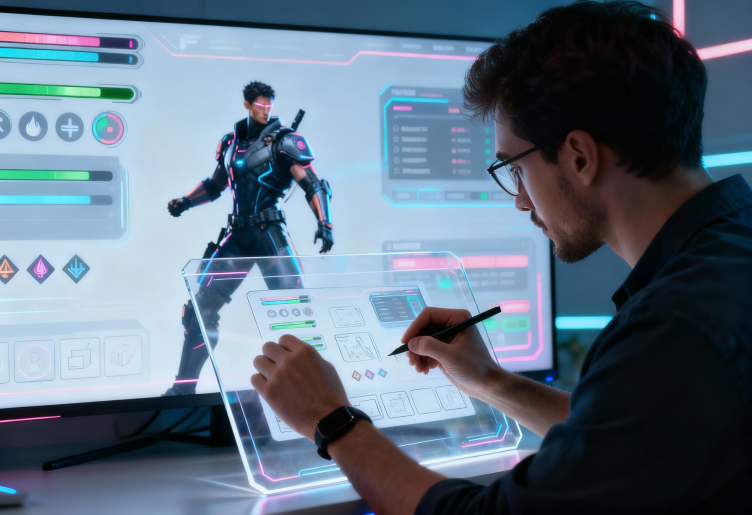

In gaming, titles are usually grouped into three buckets – AAA, AA, and indie – depending on budget, team size, and overall scope. Publishers and developers use these labels to give a sense of how big a project really is and what players can expect.
AAA games are the blockbusters of the industry – the gaming equivalent of Hollywood’s biggest productions. Budgets often climb into the hundreds of millions, and the teams are massive. Programmers, artists, designers, writers, audio engineers – dozens of disciplines come together to build worlds that feel almost unreal.
Because of that scale, AAA games are expected to hit the highest bar for graphics, polish, and gameplay quality. Players look at them as the “big event” releases – the ones with cinematic trailers, massive marketing pushes, and a promise of spectacle.
The video game industry’s tendency is for the market to grow and for AAA publishers to invest in finding intricate ideas to elevate interaction with the game, meeting expectations and the high standards of top AAA game companies.
The overall tendency in the video games market is that it is expected to grow at an annual rate of 8.76% between 2024 and 2027, resulting in a projected market volume of $363.18bn by 2027.

Source: Statista
How AAA Studios Shape Gaming Trends
AAA game studios have a way of nudging the whole industry in new directions. It’s not only the size of their teams or the money behind them. It’s the fact that they can take a swing at ideas that might be too risky or too expensive for smaller groups. New tech hits their desks early, and most of the time they’re the first ones to actually build something with it – new engines, odd mechanics, VR experiments, whatever feels worth trying next. To learn more about top-tier titles, read our article with examples of AAA games.
Innovation in Gameplay and Technology
If you think back to the moments when games really shifted – when players suddenly realized, “oh, games can do this?” – a lot of those breakthroughs came from big studios. The jump from tight, linear levels to a real open world with GTA III. Or how Portal used physics to mess with your expectations in the best way. Those weren’t small steps. Someone had room to experiment until something interesting took shape.
And technically speaking, AAA teams tend to push hardware the hardest. Advanced lighting, smooth physics, believable NPC behavior – those improvements usually show up in high-budget titles first. Once the tech settles, everyone else starts using it.
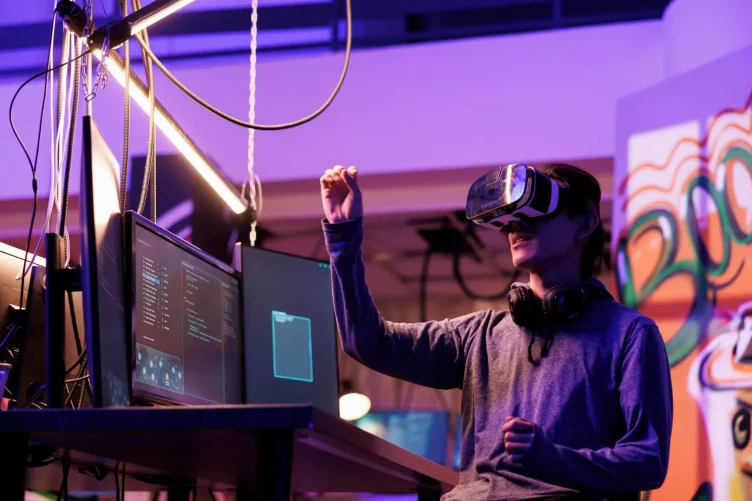
VR and AR followed a similar pattern. Early versions were clunky, but once large studios put serious effort into them, the experiences started to feel… well, like actual games rather than prototypes.
Setting Standards for Graphics
People often talk about visuals when they talk about AAA games, and for good reason. These studios pour huge resources into performance capture, materials, lighting setups – anything that helps the world feel present rather than just visually sharp.
But realism doesn’t end with how things look. It’s also the weight of animation, the timing of a jump, the way the sound wraps around a space. That combination is what convinces players they’re inside the world, even if only for a moment.
Community Engagement
One thing that has changed a lot: AAA studios don’t treat release day as the finish line anymore. Communities form instantly, they react loudly, and studios have learned to stay in the conversation. Discord servers, social channels, forum threads – they listen, at least when they’re smart about it.
Updates, tweaks, balance passes, new seasons – that’s the new life cycle. “Games as a service” didn’t appear out of nowhere. It grew naturally from this constant loop between studio and players.
Downloadable Content
DLC is always a touchy topic. Sometimes players love the extra content. Sometimes they don’t. AAA teams walk that fine line between expanding the game and making sure players don’t feel like they’re being pushed too hard toward optional purchases. When they get it right, the game feels supported rather than squeezed.
Narrative-Driven Games
Big studios have leaned more into story in the past few years. Complex arcs, moral choices, quieter emotional moments – there’s more room for all of that now. Writing teams are just as essential as art or engineering teams.
Cross-Platform Play and Cloud Gaming
Cross-platform play isn’t really a bonus anymore – most big releases are expected to support it. Players want to jump in together no matter what they’re using, whether it’s a PC, a console, or a phone. Cloud gaming pushes that idea even further by letting people run heavy games without needing powerful hardware at home.
In-Game Economy
AAA studios rely heavily on continued monetization – battle passes, cosmetics, recurring events. Not because they want to flood players with transactions, but because long-term development needs long-term funding. Indie teams experiment with these systems too, though usually at a gentler scale.
Key Roles in AAA Development
Big AAA game development companies rely on a whole mix of people doing very different jobs. There’s usually a Game Director keeping the big picture in mind, and someone on the production side making sure the team actually gets things done on time. Designers handle the moment-to-moment feel of the game, and level designers shape the areas players move through.
Art tasks are split across several groups – concept artists sketch out the look, character and environment artists build what you actually see, and animators give everything motion. On the technical end, programmers deal with gameplay code, AI behavior, performance issues, and all the tools the rest of the team needs.
Writing and audio carry more weight than people sometimes assume. The writers sort out the story threads and how characters talk, while the sound team builds the atmosphere with effects and music. Even small sounds – a menu click, a sword hitting armor – change how the whole game feels.
Then there’s QA. Testers spend their days trying everything players might do and a lot of things players aren’t supposed to do. They look for anything strange or inconsistent and send it back to be fixed. It’s not glamorous, but without that step the whole project would fall apart fast.
All of these groups overlap, sometimes in unexpected ways, and the game only really comes together once everyone’s work fits. When that happens, you start to see the “AAA” feel emerge – not because of any single department, but because every piece finally clicks with the others.

How to Choose AAA Game Developers
Partnering with the top AAA game company helps your creative idea come true. There are many skilled video game studios in the industry, each with different strengths. You must think carefully to pick the best one for a successful partnership.
When looking for an AAA game studio partner, search for studios with a range of successful game titles and genres that match your project. Their skills and knowledge will help greatly with the challenges of AAA game development.
Working with a team that values new ideas is vital for the game’s success. When you’re looking for a partner studio, it’s not just about the shiny marketing — it’s about how they actually work with people. A good studio encourages open talks, values feedback, and keeps the atmosphere team-focused instead of siloed.
- Expertise and Experience – Years in the market and a proven record across different genres, styles, and platforms.
- Portfolio – Finished games that aren’t just technically solid but also creative and commercially successful.
- Client Feedback – Positive reviews from past partners and games that were well received by the community.
- Technical Potential – Strong chops in engines like Unity or Unreal Engine, plus skills in AR/VR and AI.
- Team Size and Skill Set – Developers, designers, artists, testers – a full roster of specialists to keep projects moving smoothly.
- Project Management – Clear workflows, structured communication, and agile methods that prevent bottlenecks.
- Budget and Pricing – Flexible, competitive models that balance cost with quality.
Nobody likes dealing with contracts, but skipping the details is asking for trouble. Scope, deadlines, who owns what – it all needs to be on paper. Otherwise, arguments pop up halfway through and stall the project. Even small studios with tight budgets can usually find middle ground – maybe scaling back a feature, maybe stretching timelines – so both sides walk away happy enough to keep going.
Triple A Studios: Crafting the Rockstar Games We Love
The best AAA game companies are usually the names everyone recognizes, even people who don’t pay much attention to the industry. These studios run huge teams, work with budgets closer to film productions than traditional software, and use tech that pushes consoles and PCs harder than almost anything else. When they put out a game, it doesn’t feel like a regular release – it feels like the whole world stops to look.
What really sets them apart isn’t only the scale. When a new GTA lands, or when a Last of Us sequel drops, the bar moves. Visual quality, storytelling, online features – whatever these studios refine ends up shaping what players expect from everyone else. Their work becomes the yardstick the rest of the industry is measured against.
If you’re planning a project that needs that level of depth or polish, our list of top studios is a good starting point. Many of the best AAA game companies have shipped globally known titles and understand how to handle complex production pipelines, making them strong candidates for collaboration or co-development.
Kevuru Games Expertise in AAA Video Games
| 2011 Ukraine, Poland, the USA Team 300+ |
| Directions of Art | Environment and Props | Characters | Style |
| Environment Hard surfaces (weapons, gadgets, machinery, architectural elements, etc.) Vehicles | Characters Skins and outfits Creature and animals Hair | Realistic Stylized |
| Top-tier Clients | Epic Games is the most influential American game developer in creating highly successful games like Fortnite and the launcher of the Unreal Engine platform. Kevuru’s dedicated team contributed to the concept development of some new characters for the Fortnite competitive battle royale game. Lucasfilm is a world-famous name in the film and gaming industry, best known for its Star Wars and Indiana Jones franchises. Kevuru Games contributed to designing several 3D characters for Star Wars game-related projects with high-quality art and development services. Bytro is a German developer specializing in strategy games such as Supremacy 1914 and Call of War. Kevuru Games helped with the cross-platform strategy game Iron Order 1919, creating environment art and 3D models of soldiers and combat vehicles. Immutable is a blockchain-based gaming publisher focusing on decentralized game economies. The company develops blockchain-based esports games to introduce users to blockchain technology in a fun way. The publisher creatively launched the most successful NFT-based collectible card game, Gods Unchained. Kevuru Games partnered with Immutable to develop the Guild of Guardians. The team created an NFT collection for this fantasy multiplayer RPG. Working on NFT avatars allowed Kevuru to demonstrate skills in 2D concept art and Unity programming. Birdly is the world’s first simulator where visitors can explore their surroundings by experiencing life as a butterfly. The company SOMNIACS made the simulator Birdly the centerpiece of a special exhibition celebrating the 100th anniversary of BirdLife Switzerland. Kevuru Games’ task was to create and animate 3D models that would be part of the simulator. These included 3D models of the environment, insects, and birds, all designed lifelike. |
Key Takeaways
Kevuru, as a AAA development studio, maintains high art standards using its professional expertise and follows the client’s game vision, implementing innovative techniques and various art styles.
Creative Art Directors and knowledgeable Project Managers lead the team, ensuring quality control, regular progress reports, and efficient project risk management.
We offer to delve into the strengths of this AAA studio to understand what potential collaboration may bring you as a client:
- With a pool of 300+ skilled professionals and dedicated teams, Kevuru can handle complex, extensive projects. Its team selection is based on technical skills and offers diverse expertise across multiple disciplines. Kevuru Games follows a streamlined workflow designed to optimize efficiency – projects stay on schedule while maintaining consistently high quality.
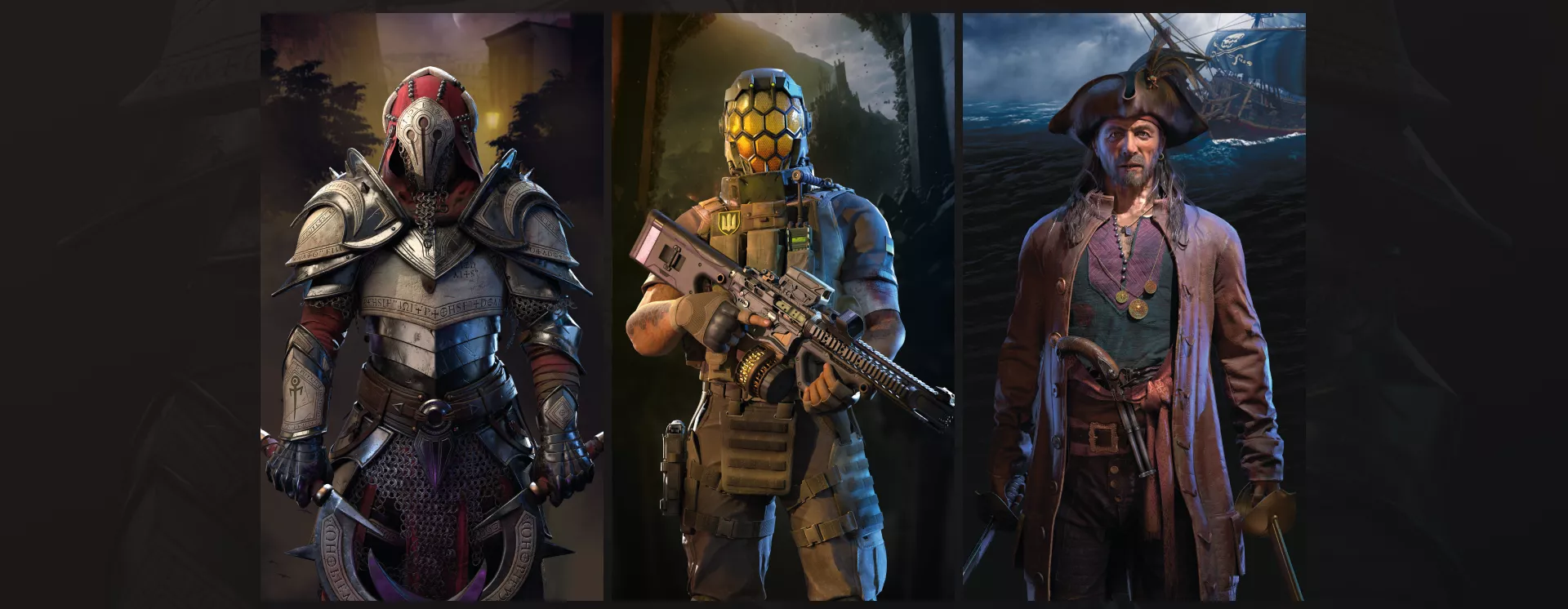
- The art team is one of the company’s strongest assets. Characters, creatures, vehicles, weapons, props, animations – across 2D and 3D – are crafted to match a client’s vision. Some projects require photorealism, others call for a more stylized look, and the team has the range to deliver both.
- Innovation plays a role, too. By weaving in VR, AR, and AI, Kevuru helps partners create games that feel current and competitive. The studio has completed more than a hundred projects and worked with publishers like Epic Games, EA, and Lucasfilm – experience that has shaped reliable pipelines and consistent delivery.
- Kevuru is also a full-cycle developer. From early concept sketches to programming, art production, and QA, every stage can be handled under one roof. That reduces friction between teams and ensures the final result feels cohesive.
- For publishers, this means more than just outsourcing tasks. It’s about having a partner that can meet industry standards, bring new ideas, and help titles succeed in a global market.
| N-iX Game & VR Studio 2012 Ukraine, Poland, Malta, Sweden, the UK, Colombia, the USA, Team 200+ | Nuare Studio is an art outsourcing company with extensive experience in the video game and movie industries. The team is dedicated to delivering top-quality artwork combined with modern design. Nuare Studio has collaborated with renowned AAA studios and companies worldwide, including Ubisoft, Epic Games, and Marvel. They had triple A titles produced and indie projects, consistently providing exceptional quality and a distinctive touch of style. Their expertise spans more narrative-driven games, movies, advertising, branding, full art-style development, and more. |
Virtuos 2004 Ukraine, Poland, Japan, Singapore, the UK, China, the USA, France, Kuala Lumpur, Korea, Vietnam, Canada Team 3800+ | Virtuos is a video game development company based in Singapore, with offices across Asia, Europe, and North America. The company specializes in game development and art production for AAA console, PC, and mobile titles, serving as an external developer for other leading companies. The Virtuos AAA developers are known for high-quality co-development and full-cycle game production services. They work with major publishers and have contributed to AAA titles and open-world games like Metal Gear Solid Delta: Snake Eater, South Park: Snow Day, Suicide Squad: Kill the Justice League, Outcast: A New Beginning, Call of Duty: Modern Warfare III, Horizon Forbidden West – Complete Edition, Dead Island 2, Hogwarts Legacy, etc. |
| Dragon’s Lake Entertainment 2018 Poland, Cyprus, Romania, the USA, Canada, the UK, Spain Team 200+ | Dragons Lake, as part of Room 8 Group, is a game development studio specializing in PC and console titles, offering advanced technical and creative services to support the production of AAA games. Room 8 Group is one of the fastest-growing strategic partners in external game development, co-development, art, trailer production, and QA for AAA console, PC, and mobile games. Dragon’s Lake Entertainment focuses on providing full-cycle game development and co-development services for AAA video game projects. Their expertise is creating immersive and expansive game worlds, offering technical precision and strong collaboration with global game developers like Paradox Development Studio, Square Enix’s External Studios, CI Games, and Canadian studio Behaviour Interactive. They are known for their contributions to high-profile titles and innovative game mechanics. |
| Art Bully 2008 Serbia, the USA Team 150+ | Art Bully Productions has been operating for over 15 years, contributing to more than 70 developed titles. As a functional art outsourcing company, this AAA studio offers concept art, modeling, texturing, rigging, skinning, and animation, serving clients, famous publishers, and indie studios. The studio’s artists move comfortably between stylized and realistic looks – a flexibility that gives projects room to take on very different visual directions. Over the years they’ve worked with some of the biggest names in the industry, from Epic Games and Activision to Bethesda, 2K, and Crystal Dynamics. Obsidian, Gearbox, Hi-Rez, and Frictional Games have also tapped the team for their projects, showing the range of studios that trust their work. |
| Ulysses Graphics 2005 Ukraine Team 100+ | Ulysses Graphics is a game art outsourcing company that focuses on 3D — characters, environments, props, animation. Their work shows up in AAA titles through collaborations with some of the industry’s biggest studios. The story goes back to 2005, when the studio started small in Kyiv, Ukraine. Over time it grew steadily, picking up partnerships with well-known publishers and contributing art to a long list of major releases. Now the team numbers more than a hundred people. They keep up with new tools and tech, refining their pipelines so assets hit the quality bar expected in today’s game market. |
| The Knights of Unity 2015 Poland, the USA Team 50+ | The Knights of Unity is a professional development studio specializing in Unity software. Founded in 2015 by three senior Unity developers in Poland, the studio’s mission is to provide dependable Unity development services on a global scale. Their expertise covers multiplatform development, porting, Google Play Instant Games & Playable Ads, custom shaders and plugins, virtual and augmented reality, rapid prototyping, code reviews, project optimization, bug fixing, Industry 4.0 solutions, backend and multiplayer development, game design, and art support. With a diverse client base, they have successfully supported over 50 companies on Unity projects across various industries and regions. Some of their notable projects include Disco Elysium, GWENT: The Witcher Card Game, Cult of the Lamb, and many others. |
| Flix Interactive 2011 the UK, France, Germany, Switzerland, Spain Team 50+ | Flix Interactive has carved out its own space around Unreal Engine – not just using it, but pushing it in directions that make projects stand out. The team’s work leans heavily into environment building and technical artistry, the kind of behind-the-scenes detail that turns a good-looking game into one players want to explore. They’ve been trusted by big names – Xbox Game Studios, Rebellion, Sumo Digital, Rare – to step in on AAA productions. And the credits show it. Pieces of Sea of Thieves, the battlefields of Hell Let Loose, missions in Sniper Elite 5 and Zombie Army 4, even parts of Crackdown 3 and Beyond a Steel Sky all carry Flix’s fingerprints. The role isn’t always headline-grabbing, but that’s the nature of co-development. Their job is often to make sure systems work smoothly, environments hold together, and the technology doesn’t get in the way of the story being told. |
| Nuare Studio 2006 British Columbia Team 30+ | Nuare Studio is an art outsourcing company with extensive experience in the video game and movie industries. The team is dedicated to delivering top-quality artwork combined with modern design. Nuare Studio has collaborated with renowned AAA studios and companies worldwide, including Ubisoft, Epic Games, and Marvel. They had triple A titles produced and indie projects, consistently providing exceptional quality and a distinctive touch of style. Their expertise spans more narrative-driven games, movies, advertising, branding, full art-style development, and more. |
| Anshar Studios 2012 Poland Team 150+ | It’s a Polish video game development studio that specializes in VR games, particularly sports games and RPGs. Anshar Studios covers a wide range of services – gameplay programming, concept art, 2D and 3D art, production process evaluation, and cross-platform development. Clients include Artifex Mundi, The Farm 51, and Seebo. A standout project with Artifex Mundi was Kate Malone: Hidden Object Detective, where the studio helped bring the mystery to life The studio brings together more than 150 specialists – game designers, artists, programmers, and production experts. With that mix of skills, they can take on complex projects and deliver workable solutions. Their strength shows most in narrative design – interactive storytelling, story-driven games, and detailed worlds that feel alive. |
Final Insights
Studios in the industry are usually grouped into AAA, AA, and indie categories – the split is based on things like budget, scope, and production values. AAA games sit at the top, often costing hundreds of millions to make, and they set the bar for quality.
Big AAA developers are the trendsetters. Their budgets give them room to experiment with new gameplay systems and push into areas like VR, AR, the metaverse, and cloud gaming. They also invest heavily in advanced graphics engines, motion capture, and lifelike animations – all aimed at making their games feel more immersive.
If you’re looking for a partner on a AAA project, it pays to weigh their track record – the experience of their team, their portfolio, feedback from past clients, and their ability to handle complex pipelines. Costs matter too, but collaboration with a seasoned AAA studio gives your project the best chance of reaching the finish line with industry-leading quality.